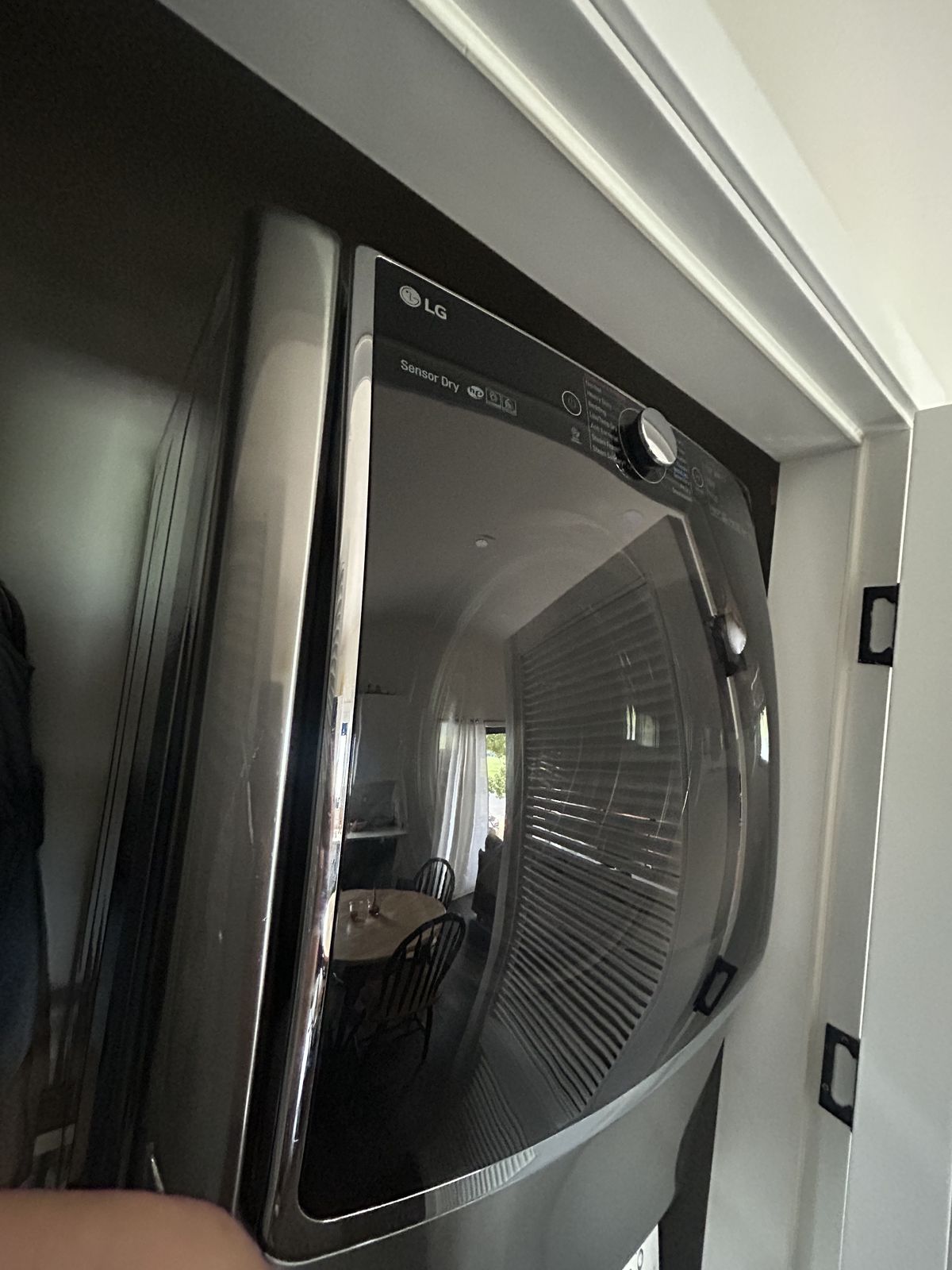
Half the houses we service around Charleston stand on piers or stem walls, and their dryer vents take the scenic route: down through the floor, along the crawlspace, and out a foundation vent somewhere the homeowner has never crawled. When a dryer starts taking ninety minutes a load in Summerville or West Ashley, the machine is usually innocent. The duct under the house is the suspect.
What happens to a vent nobody sees
Crawlspace runs fail three ways. Flexible duct sags between straps, and every sag becomes a lint trap holding damp fuzz by the handful. Joints pull apart when the house moves or a plumber bumps them, so the dryer exhausts hot, wet, lint-heavy air straight into the crawlspace — feeding mildew and coating the insulation. And the termination flap at the foundation rusts or jams, especially on homes near the marsh, so even a clean duct can't breathe.
None of this is visible from the laundry room. The lint screen looks fine, the dryer sounds fine, and the clothes stay damp.
How we actually check it
We measure airflow at the termination first — a dryer moving proper air at the hood has a healthy duct, full stop. Weak flow sends us under the house with a light and a brush kit. We're looking for sags, separations, crushed sections where someone stored plywood on the duct, and the transition pieces installers love to tape instead of clamp. Metal replaces foil flex wherever we open a run; smooth pipe sheds lint that ribbed flex hoards.
In the raised historic stock downtown and the elevated new builds near the rivers, we also check slope. A run that dips collects condensate, and standing water in a duct is how you get that musty towel smell no detergent fixes.
The Lowcountry wrinkle
Humid outside air already slows drying here; a compromised duct stacks on top of that. If your loads crept from fifty minutes to ninety over a year, that's the pattern of a duct silting up — sudden failure looks different and usually means a separation. Either way, the fix restores the dryer you paid for: we've clocked towel loads dropping by half after nothing but a proper duct rebuild.
When to call
Two cycles to dry, a hot laundry room, a burning smell, or lint dust settling on the machine itself — any of those earns an airflow test. It's a quick measurement with a written price on whatever we find, and it beats buying a new dryer to solve a fifty-dollar duct problem under the floor.