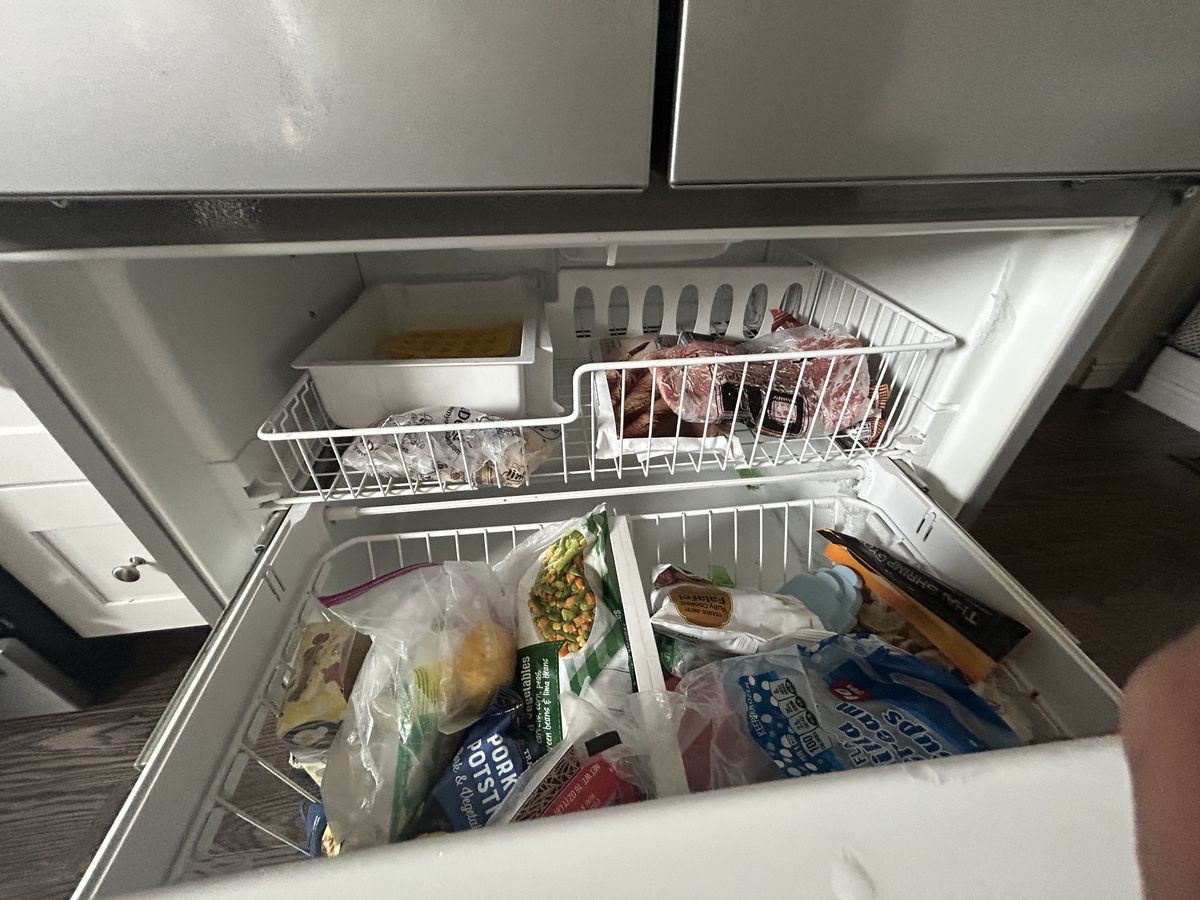
Every June the calls start: the garage fridge in West Ashley quit, the beer fridge in a Nexton garage is warm, the overflow freezer in Ladson defrosted a deer season's worth of sausage. It isn't coincidence. A Charleston garage in August is a punishment chamber for refrigeration, and the math explains every one of those calls.
The heat math
A refrigerator moves heat from inside the box to the coils outside the box, and the hotter the air around those coils, the harder the compressor works. Kitchen fridges live at 72 degrees. A closed garage here hits 100–110 by mid-afternoon, and the fridge's condenser is trying to dump heat into that. Run time goes way up, head pressure goes up, and the weakest component — usually a start relay or the condenser fan motor — taps out first. That's why garage units die in August and not in March.
Dust is the accomplice
Garage coils also live with sawdust, lawn dust, and pet hair. A furred-over condenser can't shed heat even at reasonable temperatures; add the summer load and the compressor cycles on its thermal overload until something quits. Two-thirds of the garage-fridge calls we run end with a deep coil cleaning, a new relay or fan motor, and a machine that goes right back to work.
The freezer trap
Older garage units have a second problem in the other direction: in winter, an unheated garage can fool single-thermostat models into barely running, and the freezer side thaws. If your garage unit is a decades-old hand-me-down, it was never designed for this duty on either end of the calendar. We'll tell you honestly whether yours is worth adapting or worth retiring to the curb.
Keeping the second fridge alive
Give it four inches of breathing room, vacuum the coils each spring, and if the garage bakes all afternoon, a cheap thermometer inside the box tells you when it's losing the fight before the food does. When it does falter, call while it's still cooling a little — a relay swap on a live compressor is a far smaller ticket than a compressor cooked to death over a long weekend at Edisto.